
What to look for before you sign — from a property that has hosted retreats since 2001
Organizing a group retreat is a substantial undertaking. As a facilitator you are not simply preparing a curriculum, leading yoga flows, or running strategy sessions. You are holding space for a group of people for several days, and every detail of their environment — from how far they walk for a morning coffee to the quality of light in the practice room — affects their ability to drop into the experience you have designed.
It is easy to shortlist venues on aesthetics. Cedars, ocean views, and a beautiful deck are genuinely appealing. But a venue also has to work. Where a space creates friction, the programming absorbs it, and you absorb the programming.
This is the checklist we would use, written from twenty-five years of watching what helps facilitators and what quietly undermines them.
1. Is the Property Exclusively Yours?
Many lodges and resorts host several groups at once, or keep their grounds open to visitors during your stay. That model works well for a holiday. It works poorly for an intentional multi-day retreat.
Privacy is a precondition, not a luxury
Participants arrive hoping to step out of their daily lives, lower their guard, and work on something — burnout, a creative block, a decision they have been avoiding. Reaching that state requires a sense of enclosure.
If your group shares a property with outside visitors, a wedding party, or diners at an on-site restaurant, that enclosure never quite forms. It is markedly harder to speak honestly in a sharing circle when strangers are passing the window.
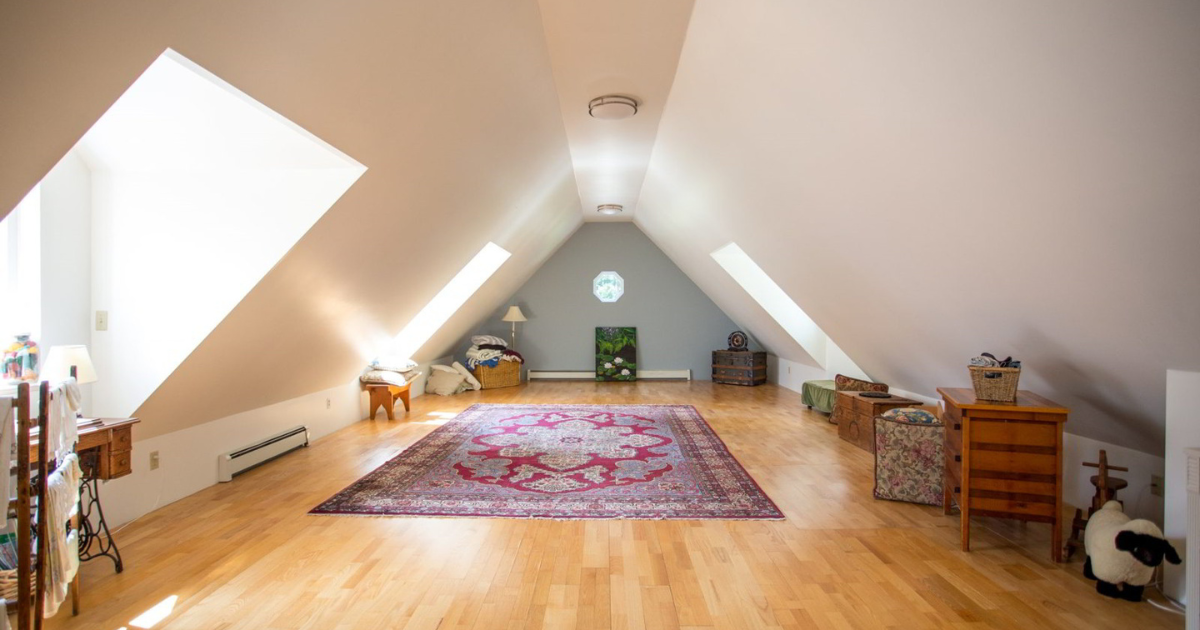
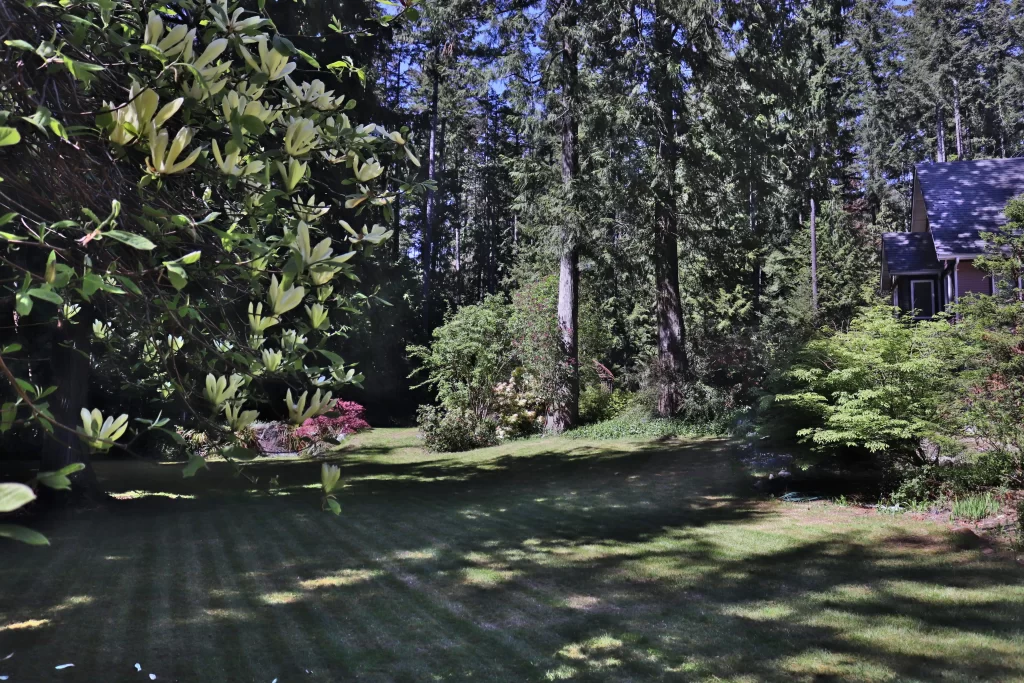
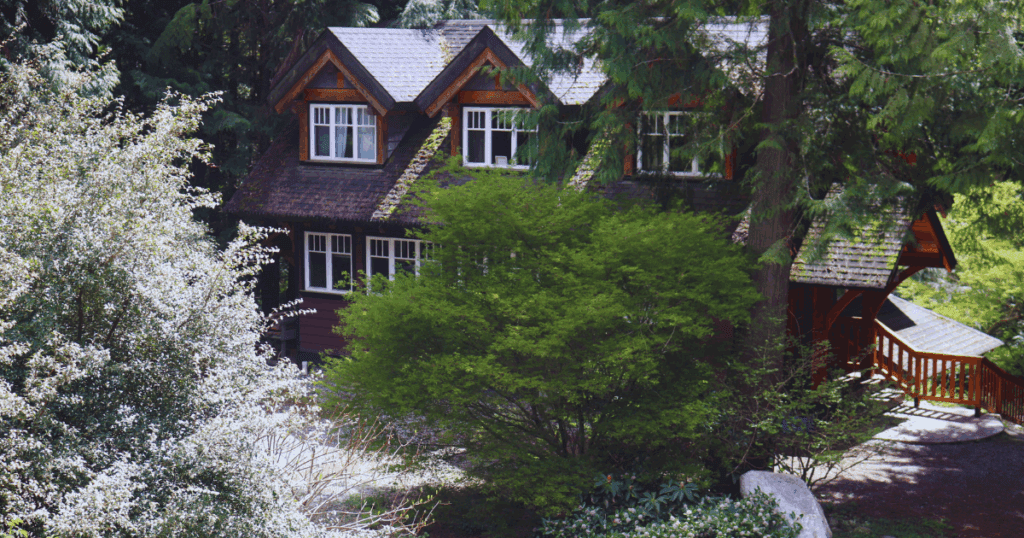
Ask directly: during my dates, is anyone else on this property? At Linwood House the answer is no. A booking gives your group the full five acres — the buildings, gardens, and trails — with no drop-ins and no shared grounds.
Schedule control follows from it
Exclusive use also means you own the clock. You are not negotiating meal times with a resort kitchen or worrying that a 6:30 am meditation will disturb guests in the next wing. If a conversation opens up and the session runs long, you let it run.
2. Is the Practice Space Actually Dedicated?
The room where your group gathers is the most important space on the property, and it is the one most often improvised — a cleared dining room, a repurposed lounge, a basement with low ceilings.
The daily teardown problem
Plenty of venues offer a room that has to be reset for breakfast, lunch, and dinner. Stacking chairs and moving props three times a day costs real time, but the larger cost is momentum. A room that has to be rebuilt each morning never quite becomes the container you need.
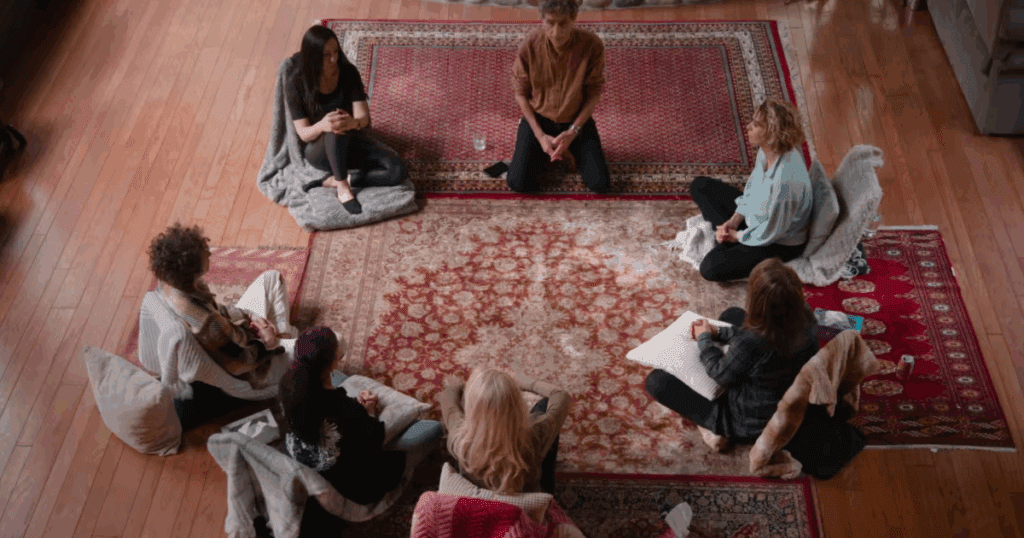
Look for a space your materials can stay in. Our studio occupies the entire third floor of the Retreat Centre — 1,200 square feet, purpose-built, and used for nothing else. Mats, cushions, easels, and flip charts stay exactly where you leave them from the opening circle to the closing one.
Ask where the kitchen is in relation to the room
Sound carries in timber buildings. If a caterer is prepping lunch on the other side of a wall while you are guiding a quiet reflection, participants will hear it and some of them will follow it.
The useful question is not whether a venue calls its space “separate” — it is where the space sits relative to the kitchen. Ours sits two floors above it, at the top of the building, with the dining and food prep areas on the ground floor. Being at the top of the house also means it takes the best light and looks straight out into the canopy on every side.
“A forest cathedral.” — how one guest described the property
3. How Are the Beds Actually Configured?
Sleeping arrangements set the comfort of your group, the price point of your retreat, and a surprising amount of the social dynamic.
Count the beds, not the capacity
A property advertising a high guest number sometimes reaches it by counting queen and king beds as shared. That is fine for couples and families. It does not work for a group of independent participants, or a leadership team, or anyone who has just met.
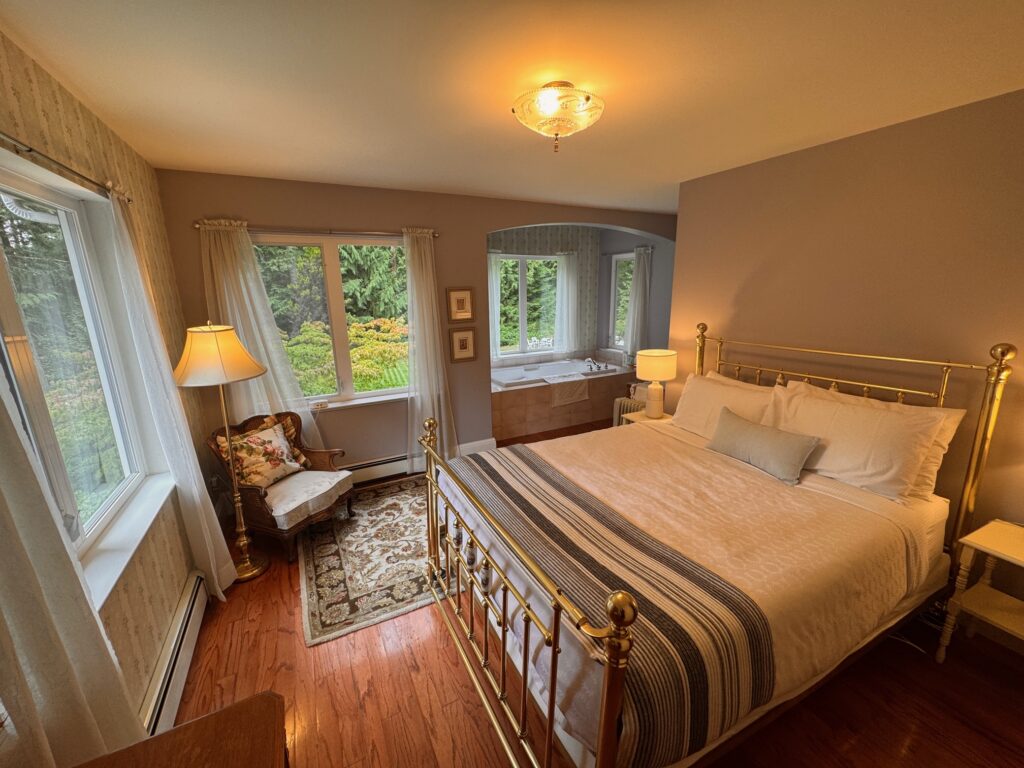
Ask for a bed list rather than a headcount. Across our two buildings we have 11 bedrooms and 15 beds, which lets you offer genuinely individual sleeping arrangements without asking anyone to share a mattress with a stranger.
Balance communal against solitary
Retreats work on an alternation between connection and retreat from it. A property that offers only dormitory-style housing, with no quiet corners, produces socially exhausted participants by day two.
Look for a mix — shared twins alongside private rooms or a separated wing. It lets you price at more than one level, and it gives the introverts, the writers, and the executives somewhere to process the day in silence.
4. Where Does the Facilitator Sleep?
This is the question most facilitators forget to ask, and the one that most affects how the retreat goes.
You cannot lead well from a shared hallway
Many leaders book themselves into a participant bedroom to save cost. The effect is that you are available twenty-four hours a day. Someone wants to discuss a breakthrough while you are making tea at six in the morning, and you have nowhere to be unavailable.
Look for a venue that gives the host a self-contained space with its own door. Our Garden Suite is a two-bedroom wing of the Retreat Centre with a private entrance, its own kitchen facilities, and a gas fireplace — set slightly apart from the main guest rooms. It is included with every booking, not sold as an upgrade, because we think a facilitator having somewhere to close a door is structural rather than optional.
Getting there should not cost you a day
A property needs to feel remote once you arrive without being punishing to reach. A venue four hours from a transit hub spends your participants’ energy before the opening session.
From West Vancouver it is a 40-minute ferry to Langdale and a 15-minute drive from the terminal. Groups leave the city after breakfast and are under the trees before lunch.
5. Does the Land Do Any of the Work?
The best retreat properties support your itinerary without you having to program every hour of it.
Somewhere to go after a heavy session
When participants come out of demanding work, they need to digest it. What they do not need is to walk directly into a corridor or a small bedroom.
Private acreage and trails let a group disperse during breaks. A quiet walk lets the nervous system settle, and people come back to the next session more available than they left. Our trails run from the property to a waterfall and out to ocean viewpoints, which makes the break itself part of the work.
The dining room is a programming space
Shared meals are where a group actually becomes a group. The dining area deserves the same scrutiny as the practice room — it should be somewhere people want to linger rather than somewhere they eat and leave.
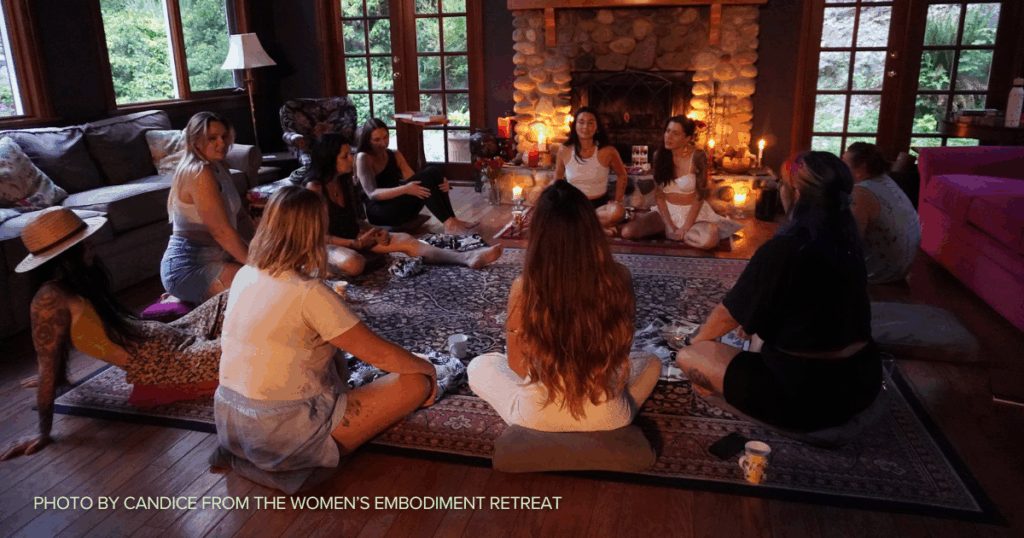
Our 700 square foot Great Room has a vaulted ceiling, a stone fireplace, and forest on three sides. It is the room groups end up in late at night, which is usually where the retreat does its quietest work.
What About the Ocean?
Worth answering directly, because facilitators comparing Sunshine Coast venues will ask.
We are not oceanfront. The water is about two kilometres away — five minutes by road to Roberts Creek Pier and beach. What that buys you is a forest property with no through-road, no neighbours in sight, and no passing traffic, which is a harder thing to find than a sea view.
Most groups build a half-day around the coast: an afternoon at the pier, a low-tide walk on the sandbar, or a kayak with a local outfitter. Then they come back up into the trees.
The Shortlist, Condensed
If you take one thing into your venue calls, take this.
| Ask | What a good answer sounds like |
| Is anyone else on the property during my dates? | No — exclusive use of the whole site |
| Does the practice room need resetting for meals? | No — dedicated space, materials stay put |
| Where is the practice room relative to the kitchen? | A floor or a building away, specifically stated |
| Can I see a bed list rather than a capacity number? | Yes, sent without hesitation |
| Where does the facilitator sleep? | A self-contained space with its own entrance |
| How long from the nearest transit hub? | Under two hours door to door |
| What is the rain plan? | A named indoor space, not a maybe |
| What catering models do you support? | More than one — full service, self-catered, or hybrid |
Common Questions
How many people does Linwood House sleep?
11 bedrooms and 15 beds across the Retreat Centre and the Carriage House. We are best suited to groups of 6 to 15.
Is the Garden Suite an extra cost?
No. It is a two-bedroom wing of the Retreat Centre and is included with every booking. Most facilitators use it as their own quarters.
How far is the venue from the ferry?
About 15 minutes from the Langdale terminal, which is a 40-minute sailing from Horseshoe Bay. Gibsons and Sechelt are both roughly 15 minutes away.
How far is Linwood House from the ocean?
Around two kilometres — a five-minute drive to Roberts Creek Pier. The property itself is forested rather than oceanfront.
Do you provide catering?
We work with a network of Sunshine Coast caterers and will connect you with the right fit for your group, budget, and dietary requirements. You are also welcome to self-cater; the kitchens support it.
Do you provide teachers or practitioners?
Most groups bring their own facilitator. If you would like referrals for yoga teachers, sound healers, massage therapists, or hiking and kayaking guides, we can connect you with trusted local practitioners.
Is there a dedicated practice space?
Yes — a 1,200 square foot studio occupying the third floor of the Retreat Centre, with forest views on every side. It is not used for dining or any other purpose.
Before You Sign
Step back from the photographs and walk mentally through one full day of your retreat, start to finish.
Where do participants wake up, and how far do they go for coffee. Whether the morning silence holds. Whether your materials will still be where you left them. Whether there is a door you can close when you have nothing left to give for an hour.
A venue that answers those questions well disappears into the background, which is the whole job. You are then free to do yours.
Plan Your Retreat at Linwood House
If you are looking at venues for a wellness retreat, corporate offsite, or creative gathering on BC’s Sunshine Coast, tell us what you are planning — group size, dates, and what you want participants to leave with. We will tell you honestly whether we are the right fit.
Website: linwoodhouse.ca
Email: info@linwoodhouse.ca
Phone: (604) 998-8039
Address: 3144 Linwood Rd, Roberts Creek, BC V0N 2W1